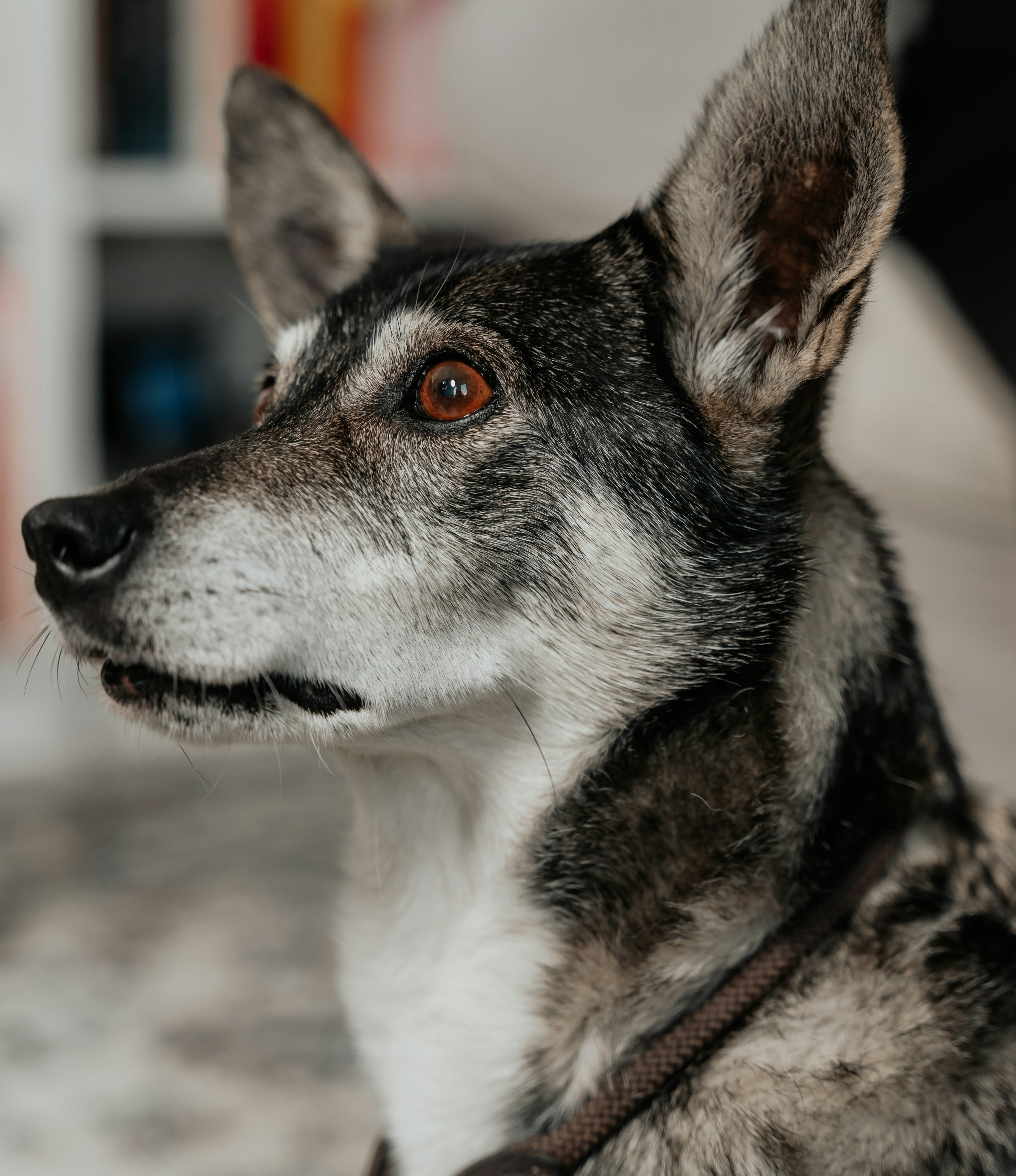
The head tilt is one of the most universally beloved dog behaviors — and one of the most underestimated. Far from being a simple reaction, it reveals a surprising amount about how dogs listen, think, and connect with you.
It Starts With Sound
The most straightforward explanation for the head tilt is auditory. Dogs have highly mobile outer ears that can rotate and adjust independently to pinpoint the source of a sound. When a dog tilts their head, they're actually repositioning their ear canals — essentially "aiming" them to better capture and triangulate what they're hearing.
This is especially useful for dogs trying to process complex sounds, like speech. When you talk to your dog in a sentence that includes a key word they know — "walk," "outside," "dinner" — they often tilt their head right when that word appears. They're not just reacting. They're actively working to process it more clearly.
A 2021 study at the Family Dog Project in Budapest found that dogs who tilted their heads more frequently when hearing word commands also showed significantly better word retention and recognition. The head tilt, researchers concluded, is associated with meaningful mental engagement — not just passive reaction.
The Muzzle Problem
Stanley Coren, a well-known canine psychologist, proposed a fascinating additional explanation: dogs tilt their heads to see around their own muzzles. Think about it — a dog's snout is directly in their line of sight. When they look straight at a human face, the muzzle can block the view of the lower half of your face, including your mouth.
Coren ran an informal study showing that dogs with flatter faces (like Bulldogs and Pugs) tilted their heads less frequently than dogs with longer muzzles (like Collies or German Shepherds). The head tilt, in this interpretation, is a visual adjustment — a way of getting a clearer view of your facial expression, which carries crucial emotional information.
Reading Your Face Matters to Them
Dogs are remarkably good at reading human facial expressions — better, in fact, than almost any other animal. They've been doing it for thousands of years. A dog tilting their head to see your face more clearly isn't incidental. They're gathering emotional data, reading your mood, and deciding how to respond. It's social intelligence in action.
Empathy and Attentiveness
There's a third dimension to the head tilt that researchers are increasingly interested in: empathy signaling. When dogs tilt their heads during human speech, they often hold eye contact and subtly adjust their body posture at the same time. This cluster of behaviors mirrors what attentive, empathetic listening looks like — in humans and dogs alike.
Interestingly, dogs are more likely to tilt their heads when their owners speak in an emotionally expressive, animated tone than when they speak flatly. They seem to be tuning in not just to the words, but to the emotional content behind them.
When the Head Tilt Becomes a Concern
In young and healthy dogs, the head tilt is almost always a normal, healthy behavior. But for senior dogs, a persistent or sudden head tilt that is involuntary — meaning the dog can't seem to straighten their head and appears unbalanced — can be a medical symptom worth investigating.
Conditions like vestibular disease (common in older dogs and often mistaken for a stroke), ear infections, or neurological issues can cause a pathological head tilt. If your senior dog suddenly develops a tilt accompanied by loss of balance, circling, or rapid eye movement, seek veterinary care promptly. In most cases, vestibular episodes resolve on their own within a few weeks — but a vet visit is always the right first step.
Old Dog Vestibular Syndrome is one of the most common causes of sudden head tilt in dogs over 8 years old. It looks alarming — rapid eye flicking, falling, disorientation — but it's rarely life-threatening. Most dogs recover significantly within 72 hours and fully within a few weeks. Always confirm with your vet first.
Do Smarter Dogs Tilt More?
The Budapest research suggested yes — dogs who were identified as having better word comprehension (called "gifted word learner" dogs) tilted their heads significantly more often. This doesn't mean non-tilters are less intelligent, but it does suggest the head tilt reflects active cognitive engagement, not just a reflexive response.
A dog who tilts their head when you talk to them is working hard to understand you. That's worth appreciating — and returning with equal attentiveness.
🧠 Key Takeaways
- Head tilts help dogs better capture and triangulate sounds — especially words they recognize
- Dogs with longer muzzles tilt more to see around their snout and read your facial expression
- Head tilts are associated with higher word retention and active mental engagement
- A voluntary head tilt is healthy; a sudden involuntary tilt in a senior dog warrants a vet visit
- Vestibular disease is the most common medical cause of sudden head tilt in older dogs
The next time your dog cocks their head at you with that irresistible sideways look, know that something genuinely interesting is happening inside that mind. They're listening, decoding, feeling, and trying to understand you better. That tilt is a small gesture with a lot of heart behind it.