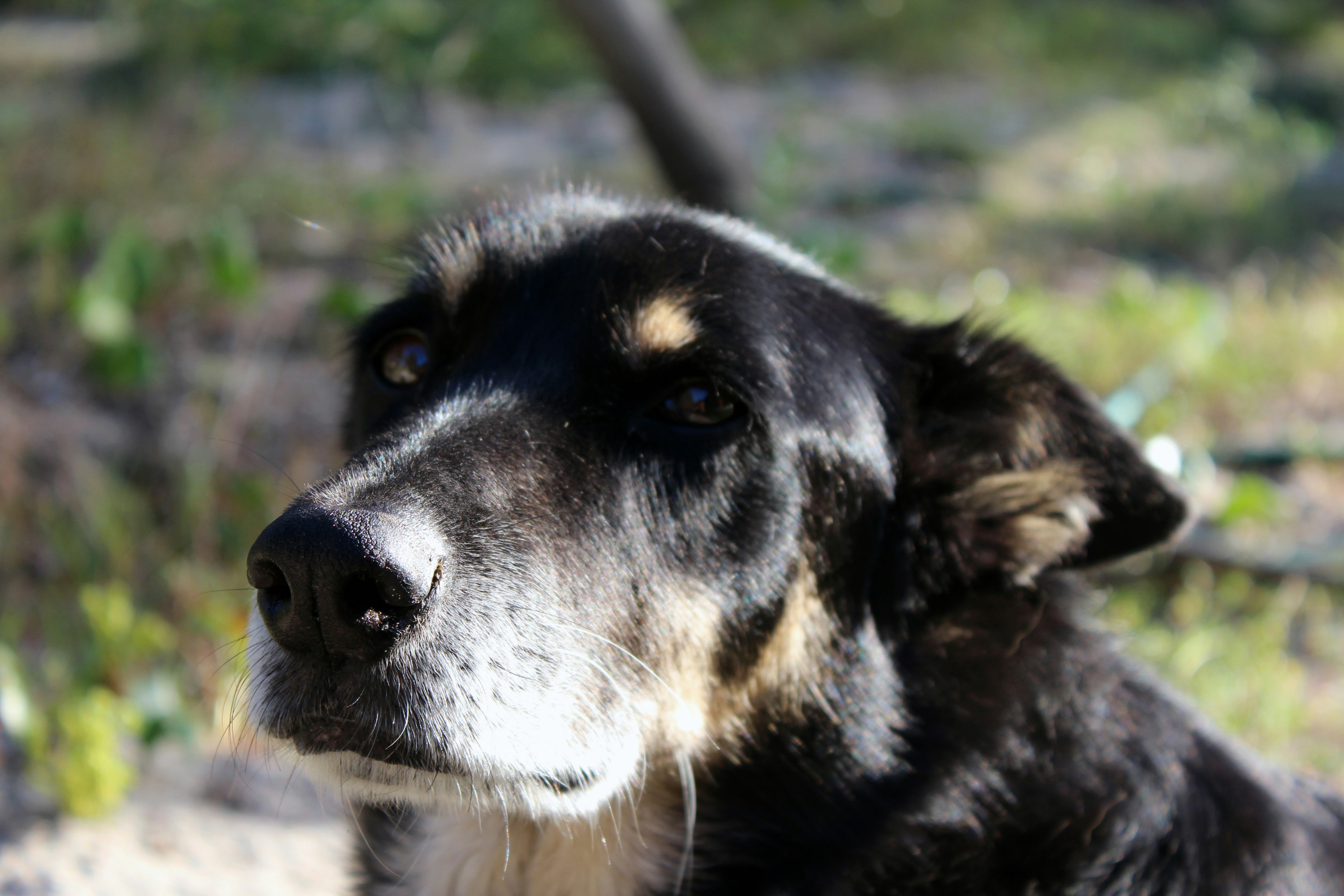
To humans it looks awkward at best. But in dog culture, the nose-to-rear greeting ritual is the equivalent of a full background check, a health report, and an introduction — all completed in under ten seconds.
A Nose Built for Information
Dogs have approximately 300 million olfactory receptors in their noses — compared to about 6 million in humans. Their brain's olfactory processing region is, proportionally, 40 times larger than ours. They don't just smell things more intensely; they experience a fundamentally different kind of olfactory reality. Scent, for a dog, is the primary sense through which the world is understood.
The Jacobson's organ — a specialized scent-processing structure located in the roof of the mouth, connected directly to the brain's emotional and instinctual centers — processes chemical signals called pheromones. These carry information that bypasses conscious analysis and speaks directly to the dog's brain at a primal level.
The anal glands — small sacs near a dog's rear — secrete a complex cocktail of chemicals unique to each individual. From a single sniff, a dog can detect another dog's sex, reproductive status, approximate age, emotional state at the time of the secretion, diet, and even health status. It's a biological ID card, updated continuously.
Why Specifically the Rear?
The anal area concentrates the highest density of glandular secretions and offers the richest chemical information. Sniffing the face and mouth provides complementary data — what they've eaten, their current emotional state, breath chemicals that can signal health. Together, face-sniff and rear-sniff give a nearly complete profile of the other dog.
Dogs also sniff urine and feces for the same reason — it's not grossness, it's reading. Every marking is a message left for the next passerby, and every dog who follows behind is reading the local news.
What Senior Dogs Learn — and Leave
As dogs age, the information they broadcast changes. Older dogs may carry different hormonal signatures, and health changes can show up in their scent profile before they're visible to humans. Other dogs often respond differently to senior dogs — approaching more cautiously, sniffing longer, sometimes displaying deferential body language. They're reading the elder's chemical story.
Senior dogs who have lost some mobility may sniff less actively during walks, but their interest in sniffing doesn't diminish — it often increases. Slow, investigative sniffing of a patch of ground, a tree, or a fire hydrant is the canine equivalent of reading the newspaper. Never rush a senior dog through their sniff. It's one of the most mentally enriching activities available to them.
Sniffing as Mental Enrichment
Research on dog cognitive fatigue has found that 20 minutes of nose work (sniff-based activity) is as mentally tiring as an hour of physical exercise. For senior dogs whose bodies can't keep up with the activity levels of their youth, sniffing-heavy walks — slow, exploratory, off-leash where safe — provide profound mental engagement. Let them lead. Let them stop. Let them read.
👃 Key Takeaways
- Dogs have 300 million olfactory receptors — scent is their primary sense
- A single rear-sniff reveals sex, age, emotional state, diet, and health signals
- Anal gland secretions function as a biological ID card updated continuously
- Senior dogs broadcast different scent profiles — other dogs respond accordingly
- Sniff-heavy walks are as mentally enriching as vigorous exercise for aging dogs