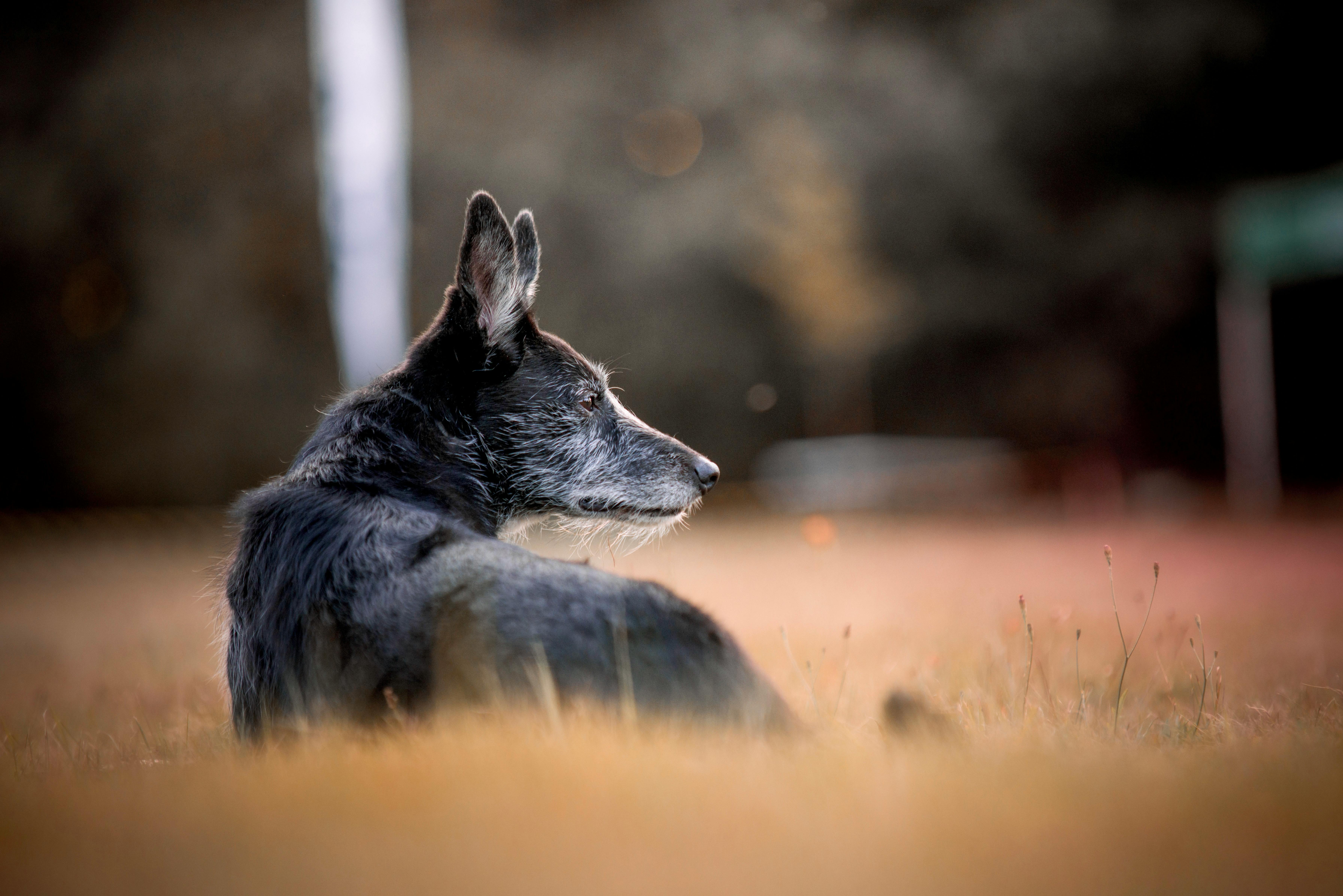
"An aging dog who stops being challenged mentally doesn't just become bored — they decline faster. The mind, like the body, needs gentle, consistent exercise to remain healthy. And the good news is: your presence is the most powerful enrichment tool available."
— Senior Pet Legacy
🧠
Why Mental Enrichment Matters More as Dogs Age
Physical exercise often receives most of the attention in senior dog care conversations — but mental stimulation is equally critical and often more accessible for aging dogs whose bodies can no longer sustain the activity levels of their youth. The brain, like any organ, responds to use: dogs who are mentally engaged age with greater cognitive resilience, lower anxiety, and a more stable emotional baseline.
Research into canine cognition consistently shows that dogs who receive regular mental enrichment throughout their lives — and especially in senior years — show significantly slower rates of cognitive decline. The neural connections that are used are maintained; those that are ignored fade. Every puzzle solved, every scent tracked, every gentle training session is an investment in your dog's brain health.
Beyond the neurological benefits, mental enrichment addresses something equally important: emotional fulfillment. A senior dog who feels engaged, useful, and connected to their family is a dog who thrives — not just survives — their golden years.
🎯
Puzzle Toys & Cognitive Games
Interactive puzzle toys are one of the most effective and accessible enrichment tools for senior dogs. They engage problem-solving instincts, reward persistence, and provide genuine mental fatigue — the satisfying tiredness that comes from thinking hard, not just moving. For dogs whose physical capacity has diminished, puzzle toys offer a way to experience that satisfying sense of accomplishment without joint strain.
The key is appropriate challenge. A puzzle too simple provides no stimulation; a puzzle too complex causes frustration. Begin with easier levels and progress gradually as your dog builds confidence and skill. Variety also matters — rotating between different types of puzzles prevents habituation and keeps engagement high.
🎯
A well-designed interactive puzzle toy channels your senior dog's natural problem-solving drive into a rewarding, low-impact activity. Hide kibble or small treats inside and let them work — the concentration required is genuinely tiring in the best possible way, promoting calmer behavior and better sleep.
View on Amazon →
- Start with Level 1 puzzles — build confidence before increasing difficulty
- Use high-value treats inside puzzles to maintain motivation
- Keep sessions to 10–20 minutes — mental fatigue sets in faster than you'd expect
- Rotate between 3–4 different puzzles to prevent habituation
- End every session with success — never leave your dog frustrated
- Puzzle feeding at mealtimes replaces the bowl and adds daily enrichment effortlessly
👃
Scent Work — The Most Natural Enrichment of All
Of all the enrichment activities available to senior dogs, scent work may be the most powerful. Dogs experience the world primarily through smell — their olfactory system is estimated to be 10,000 to 100,000 times more sensitive than a human's. Engaging this system provides profound mental stimulation that costs virtually nothing and places minimal physical demand on aging joints.
Simple scent games — hiding treats around a room, under cups, or in a snuffle mat — can occupy and satisfy a senior dog for far longer than a physical play session. The concentration required activates multiple brain regions simultaneously, providing the kind of deep mental engagement that promotes cognitive health and emotional calm.
👃 Start a Simple Scent Game Today
Place three cups upside down on the floor. Hide a small treat under one. Let your dog sniff and find it. Reward enthusiastically when they find the right cup. Gradually increase to more cups, hidden treats in different rooms, or scented objects hidden throughout the house. Your dog will be completely absorbed — and you'll be amazed at how tired they are afterward.
🌿
A snuffle mat hides kibble or treats in fabric folds that the dog must root through using their nose. It transforms every mealtime into a scent enrichment session — slowing eating, reducing digestive stress, and providing 10–15 minutes of genuine mental engagement with zero physical strain.
View on Amazon →
🎓
Gentle Training — Old Dogs, New Tricks
The saying "you can't teach an old dog new tricks" is not only wrong — it is precisely backwards. Senior dogs benefit enormously from gentle, reward-based training sessions. Learning new cues, reviewing familiar ones, and problem-solving with their owner engages multiple cognitive systems simultaneously while reinforcing the bond that is central to a senior dog's emotional wellbeing.
Training sessions for senior dogs should be short (5–10 minutes), positive, and low-pressure. The goal is not performance — it is engagement, connection, and the quiet pride a dog feels when they've done something well and their person responds with warmth. Even a simple "sit, wait, come" sequence done with full attention and genuine reward provides meaningful cognitive and emotional benefits.
🎓 New Tricks Worth Teaching a Senior Dog
Touch (nose to hand target), which direction to look on cue, finding named objects, identifying toys by name, relaxation training (settling on a mat on cue), and basic scent discrimination. These are all mentally demanding, physically gentle, and deeply satisfying for the dog — and for you.
😟
Recognizing & Addressing Anxiety in Senior Dogs
Anxiety becomes more prevalent in senior dogs as a result of several converging factors: sensory decline (reduced vision or hearing makes the world feel less predictable), cognitive changes (CCD disrupts emotional regulation), physical pain (which creates a constant background of stress), and changes in routine or environment. An anxious senior dog is not a "difficult" dog — they are a dog whose nervous system needs support.
Signs of anxiety in senior dogs include increased clinginess, panting without physical cause, pacing, trembling, excessive vocalization, changes in appetite, or hiding. These are communication, not misbehavior, and they deserve a compassionate, informed response.
⚠️
When Anxiety Needs Veterinary Attention
Sudden onset of significant anxiety in a previously calm senior dog — particularly if accompanied by confusion, disorientation, or sleep disruption — may indicate Canine Cognitive Dysfunction, pain, or a medical condition. A veterinary assessment should precede any behavioral intervention.
🌿
An orthopedic bed with bolstered sides provides the physical containment that anxious senior dogs find deeply calming — a defined, comfortable space that signals safety and belonging. The raised edges mimic the security of sleeping against another body, reducing nighttime anxiety significantly.
View on Amazon →
❤️
The Bond — Your Most Powerful Enrichment Tool
Every enrichment activity, every puzzle toy, every training session is valuable. But none of them compares to the irreplaceable enrichment of genuine, unhurried time with their person. Dogs are social animals whose entire emotional architecture is organized around their relationships — and senior dogs, whose world has often contracted as physical activity has decreased, are particularly dependent on the quality of their human connection for emotional health.
This does not require elaborate activities. Sitting together quietly while you read. Slow grooming sessions. Gentle massage along the back and shoulders. Talking to your dog in a calm, warm voice while you go about your day. These simple acts of presence communicate safety, love, and belonging — and they are neurologically active for your dog in ways that measurably reduce stress hormones and support cognitive health.
💛 Schedule Daily Connection Time
Set aside 15–20 minutes each day with no phone, no distractions, and no agenda — just you and your senior dog. Gentle massage, quiet companionship, or calm play. Make it consistent and make it sacred. For your dog, it is the most meaningful part of their day. And it may become one of the most meaningful parts of yours.
🧩
Daily Enrichment — A Simple Weekly Plan
Enrichment doesn't need to be elaborate or time-consuming to be effective. Consistency matters far more than complexity. A simple rotating schedule of different activities keeps your senior dog mentally stimulated without overwhelming them or you.
- Monday / Thursday: Puzzle toy or snuffle mat at mealtime
- Tuesday / Friday: 10-minute scent game — treats hidden around the house
- Wednesday / Saturday: Short, gentle training session — 5–10 minutes of known or new cues
- Daily: 15–20 minutes of quiet bonding time — grooming, massage, or calm companionship
- Daily: At least one outdoor sniff walk — let them lead with their nose
- Sunday: Rest and free choice — observe what your dog naturally gravitates toward
An Engaged Mind Is a Thriving Mind
The years your senior dog has left are not just about managing decline — they are about continuing to grow, connect, and experience the joy of a life well lived. You are their world. Make it rich.
Explore Senior Dog Products →