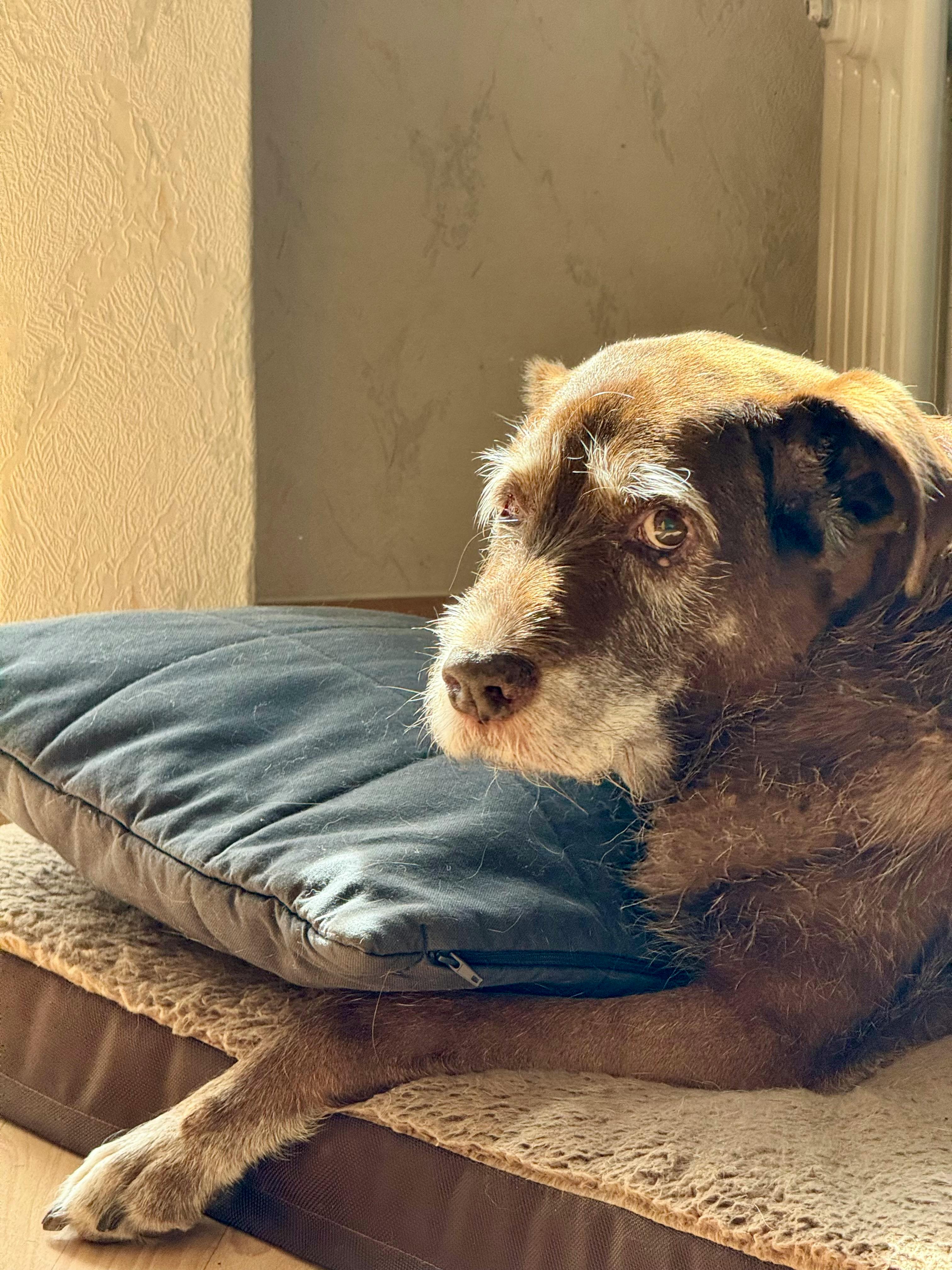
Why Comfort & Mobility Matter More Than You Think
Most dog owners recognize when something is seriously wrong. But the earlier, subtler signs of physical decline — the ones that happen gradually over months — are easy to miss or dismiss as "just getting old." The truth is that many of those changes are manageable, and often dramatically improvable, with the right interventions.
Mobility isn't just about physical capability. It's about dignity, confidence, and emotional wellbeing. A dog who can move through their home without pain, who can get to their water bowl easily, who can settle into sleep without struggling — that dog is a happier, calmer, more fulfilled dog. And that matters enormously to the quality of their final years.
"A dog who moves with less pain doesn't just feel better physically — they sleep better, eat better, engage more, and live more fully in the time they have left."
The Signs Your Senior Dog Is Uncomfortable
Dogs are masters at hiding pain — a survival instinct inherited from their wild ancestors. By the time a dog is obviously limping or crying, they've often been managing discomfort for weeks or months. Learning to read the subtle early signals is one of the most important skills a senior dog owner can develop.
Early Warning Signs to Watch For
- Taking longer to rise from lying down — especially first thing in the morning
- Hesitating before jumping onto furniture, into the car, or up stairs
- Stiffness after periods of rest that eases once they've been moving
- Choosing not to do activities they previously enjoyed — shorter walks, less play
- Shifting weight off one leg, or a subtle change in their gait or posture
- Licking or chewing at a specific joint area — a common self-soothing behavior
- Sleeping more than usual, or sleeping differently than before
- Irritability when touched in certain areas, or uncharacteristic grumpiness
If you notice two or more of these signs consistently, a veterinary visit is the right next step. Blood panels, X-rays, and a physical exam can identify the specific cause — whether it's osteoarthritis, hip dysplasia, spinal changes, or something else — and give you a targeted plan to work with.
The Right Bed Changes Everything
This is the single most impactful home change most senior dog owners can make — and it's also one of the most underestimated. A thin, flat dog bed provides almost no pressure relief for aging joints. For a dog already managing arthritis or hip discomfort, sleeping on an inadequate surface night after night adds up to hours of unnecessary strain.
What you're looking for is a thick memory foam orthopedic bed — not just a padded cushion. Memory foam distributes body weight evenly, reducing pressure on hips, elbows, and shoulders. It also means your dog doesn't have to work hard to shift position or rise, which matters enormously for arthritic dogs who stiffen during sleep.
Look for a low-entry design without raised edges that require stepping over, and a washable cover — senior dogs sometimes have accidents, and a bed that can be kept clean is a bed that stays comfortable and hygienic.
Thick memory foam with even weight distribution — dramatically reduces joint pressure and makes rising easier for arthritic senior dogs. Low-entry design and washable cover included.
View on Amazon →Placement matters too. Put the bed somewhere warm — cold floors and drafty corners worsen joint stiffness. A spot with natural morning light is ideal. Many senior dogs instinctively seek warmth as they age, and giving them a warm, cushioned base significantly reduces overnight discomfort.
Slippery Floors Are a Hidden Danger
Hardwood floors, tile, and laminate are beautiful — and genuinely hazardous for senior dogs. A dog who lacks confident traction slips and scrambles every time they try to stand, which causes micro-injuries to already-stressed muscles, creates anxiety around movement, and accelerates the avoidance of activity that worsens joint stiffness. It's a cycle that happens slowly and quietly.
The fix is simple and inexpensive: non-slip area rugs placed along the routes your dog travels most — from their bed to the water bowl, from the kitchen to the back door. Cover the spaces they actually use. For rugs that tend to slide, rug grip tape anchors them firmly so your dog can push off when rising without the rug moving beneath them.
Provides secure footing on hard floors along your dog's daily routes. One of the simplest, most impactful safety improvements for any senior dog's home environment.
View on Amazon →Keeps rugs anchored firmly so your dog can push off safely. Essential for dogs with hind-end weakness or joint pain who need stable footing when rising.
View on Amazon →Eliminate the Jumps That Hurt
For most of their lives, dogs jump without thinking — into the car, onto the bed, onto the couch. Each of those jumps involves significant impact force through the spine and joints. For a young, healthy dog, this is no problem. For a senior dog with arthritis or a compromised spine, repeated high-impact jumping is genuinely damaging — and often visibly painful.
The solution isn't to banish your dog from the car or the couch — it's to give them a gentler route. A well-built dog ramp eliminates the impact entirely, letting your dog maintain the independence and the closeness they love without the cost to their joints. Most dogs adapt to ramps quickly, especially with a little encouragement and a treat or two on the first few uses.
Eliminates the impact of jumping for senior dogs — protects the spine and joints on every car trip and every trip to the couch. Most dogs adapt within a few days.
View on Amazon →Supplements That Actually Help
The joint supplement market is enormous and noisy. But the evidence base for a few specific compounds is genuinely solid — and for senior dogs, incorporating them early (before obvious symptoms appear) is far more effective than starting after significant damage has occurred.
Glucosamine & Chondroitin
The most well-studied joint supplement combination. Glucosamine supports cartilage repair and synovial fluid production, while chondroitin inhibits the enzymes that break cartilage down. Together, they slow joint deterioration and reduce pain — particularly effective when started before arthritis is severe.
Omega-3 Fatty Acids (Fish Oil)
Fish oil rich in EPA and DHA is one of the most powerful anti-inflammatory supplements available for dogs. It reduces the systemic inflammation that drives arthritis, benefits the heart and kidneys, and improves coat and skin health as a bonus. Most dogs love the taste added to food.
Collagen
Collagen supplementation supports the integrity of connective tissue throughout the body — tendons, ligaments, joint capsules, and cartilage. It's particularly helpful for dogs with generalized joint issues and can be combined safely with glucosamine and fish oil.
Always discuss new supplements with your veterinarian before starting, particularly if your dog is on other medications. Most of the above are very safe, but your vet can advise on appropriate dosing for your dog's size and health status.
Walking Right: Exercise Without Damage
Movement remains one of the best medicines for arthritis — but the type and timing of exercise matters enormously. The goal is to maintain muscle mass and joint lubrication without causing pain or inflammation. A dog who stops moving entirely loses muscle rapidly, which paradoxically worsens joint pain as the muscles can no longer support the joint.
Senior Dog Exercise Guidelines
- Shorter, more frequent walks are better than one long walk — two or three 15-minute walks beat one 45-minute walk for arthritic dogs
- Warm up slowly — start every walk at a gentle pace and let your dog find their rhythm before increasing speed
- Avoid hard surfaces when possible — grass and dirt are far easier on joints than pavement
- Watch for post-exercise stiffness — if your dog is stiffer after activity than before, the walk was too long or too intense
- Swimming and hydrotherapy are the gold standard — water removes body weight from joints while maintaining full range of motion
- Skip the off-leash sprinting — even if they want to, a senior dog chasing a ball will often push through pain and pay for it later
For dogs who need help on walks — particularly larger breeds with significant hind-end weakness — a support harness with a rear handle allows you to take some of the weight when needed, making walks safer and more sustainable for longer.
Allows you to gently assist your dog when rising, navigating stairs, or walking on uneven terrain. Reduces strain on both the dog and the owner during assisted movement.
View on Amazon →Hydration: The Underrated Mobility Factor
Joint cartilage is largely water — and dehydration directly reduces its cushioning ability. Many senior dogs drink less than they need, particularly if joint pain makes it uncomfortable to lower their head to a floor-level bowl, or if they're on medications that affect their thirst response.
Switching to a circulating water fountain encourages most dogs to drink significantly more — the movement and freshness of flowing water is instinctively appealing. Elevating the water bowl slightly also reduces the neck strain that makes drinking uncomfortable for dogs with spinal or shoulder issues.
Circulating water encourages senior dogs to drink more — directly supporting joint cartilage health and kidney function. Quieter and easier than traditional bowls for dogs with mobility challenges.
View on Amazon →Nutrition & Weight: The Biggest Lever You Have
Here is the single most impactful thing most senior dog owners can change: body weight. Every extra pound of body weight adds approximately four pounds of force to a dog's joints with each step. For a dog already managing arthritis, carrying excess weight isn't just uncomfortable — it's actively accelerating damage.
Transitioning to a senior-formulated dog food with controlled calories is the starting point. Senior formulas are typically lower in calories to account for reduced activity, higher in protein to preserve muscle mass, and often enriched with joint-supporting nutrients like glucosamine and omega-3s. Portion control matters — measure every meal, skip the table scraps, and use your vet's body condition score as your guide.
Calorie-controlled with maintained protein and joint-supporting nutrients — formulated specifically for the metabolic and mobility needs of dogs over 7. Every pound less is four pounds less on their joints.
View on Amazon →Nighttime Comfort & Navigation
Senior dogs often have more difficulty navigating at night, particularly if vision is declining or cognitive changes are causing disorientation. A dog who stumbles in the dark, collides with furniture, or can't find their water bowl is a stressed, uncomfortable dog. Something as simple as a soft night light placed near their sleeping area, water bowl, and any steps or thresholds can make a meaningful difference in their overnight comfort and confidence.
Helps senior dogs with declining vision or cognitive changes navigate at night safely — reducing anxiety, disorientation, and the risk of nighttime accidents or falls.
View on Amazon →Monitoring From a Distance
One of the most stressful aspects of senior dog ownership is not knowing what's happening when you're not home. Is your dog getting up and moving around? Are they eating and drinking? Are they showing signs of pain or distress? A pet camera with two-way audio lets you check in throughout the day, and the two-way audio means you can offer a reassuring voice even when you can't be there in person.
Check your senior dog's mobility, breathing, and comfort remotely. Two-way audio lets you provide reassurance and monitor for any signs of pain or distress when you're away.
View on Amazon →When to See the Vet — and What to Ask
If your dog is showing signs of reduced mobility, a veterinary visit should be the first step — not the last resort. A proper diagnosis changes everything: knowing whether you're dealing with osteoarthritis, hip dysplasia, a spinal issue, or something else allows you to target your interventions precisely rather than guessing.
Ask Your Vet About
- X-rays to baseline the joints — particularly hips, elbows, and spine
- Pain management options — NSAIDs, gabapentin, and newer options like Librela (monoclonal antibody for arthritis pain)
- Physical therapy or hydrotherapy referral — both are highly effective for senior dogs
- Appropriate supplement protocol for your dog's specific situation
- Body condition scoring — get an objective assessment of your dog's weight
- How frequently to schedule mobility check-ins as the condition progresses
Senior dogs benefit from biannual veterinary check-ups rather than annual — their health can change significantly over six months, and catching changes early keeps your options wider and your dog more comfortable.
A natural daily supplement to support joint comfort and reduce anxiety in senior dogs. Easy to add to food. Many owners report noticeable improvement in mobility and ease of movement within a few weeks.
View on Amazon →Treat-format daily hemp supplement — convenient, palatable, and easy to give as part of a daily routine. A gentle option for senior dogs managing chronic discomfort.
View on Amazon →Every Comfortable Day Is a Gift You Give Them 🐾
Your senior dog cannot tell you where it hurts or ask for what they need. But they show you every day — in the hesitation at the stairs, the slow morning rise, the cautious step onto the floor. Seeing those signals and responding with the right care is one of the deepest acts of love in a dog owner's life. You're already doing it — just by being here and paying attention.