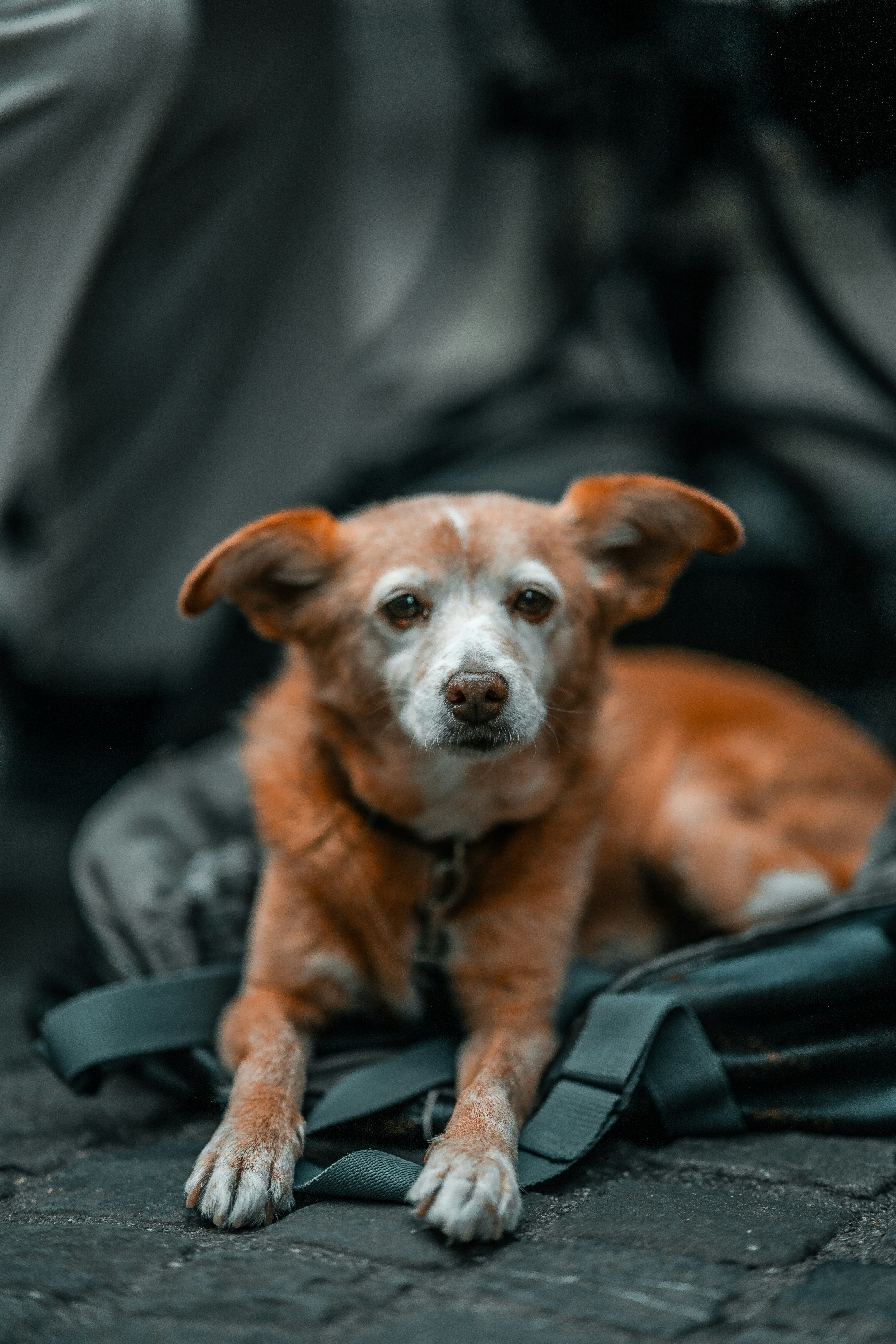
Your dog turns around. Then again. Maybe one more time. Then they finally collapse with a sigh. This nesting ritual looks quirky, but it's a behavioral fossil — a habit so ancient and so hardwired that 15,000 years of domestication haven't been able to erase it.
The Wild Ancestor Explanation
Before beds, before cushions, before the concept of "inside," dogs' ancestors slept in the wild. To create a comfortable sleeping spot, they would trample and flatten grass, leaves, and brush — circling repeatedly to mat down the vegetation into a nest-like depression. The circling also served to disturb insects, snakes, or other creatures that might be hiding in the vegetation before lying down.
This behavior was so consistently adaptive — comfortable sleep meant better recovery, and checking for threats meant surviving the night — that it became deeply encoded. Every domesticated dog born today still carries this behavioral program, running it automatically before sleep, even on a plush orthopedic memory foam bed with nothing to flatten.
Scientists call these inherited behaviors "behavioral fossils" — actions that persist long after the environmental conditions that shaped them have disappeared. The pre-sleep circle is one of the clearest examples in the domestic dog's behavioral repertoire. It's the dog equivalent of us checking under the bed out of a vague, unexamined instinct.
Temperature Regulation
There's also a thermoregulatory function. Wild canines in cold environments would circle to test wind direction, then orient themselves to minimize heat loss. In hot environments, they would excavate slightly into cooler soil, testing the surface temperature as they circled. Even in a climate-controlled home, some dogs still orient themselves in a specific direction — north-south, according to one study — possibly responding to Earth's magnetic field as a spatial calibration.
Stretching and Settling
A more mundane but valid reason: the circular movement gently stretches the muscles and loosens the joints before the body enters the stillness of sleep. For senior dogs with arthritis or stiffness, this functional stretching before lying down may be especially important. Watching how your older dog settles can give you information about their comfort level — an arthritic dog may circle fewer times and descend more carefully.
When Circling Becomes a Concern
Occasional pre-sleep circling is universal and normal. But there are situations where circling behavior warrants attention in senior dogs. Excessive, compulsive circling that isn't associated with sleep preparation — circling repeatedly while awake, seeming disoriented, or being unable to stop — can indicate vestibular disease, neurological changes, or cognitive dysfunction. If the circling seems compulsive, purposeless, or distressing to the dog, a vet evaluation is appropriate.
😴 Key Takeaways
- Pre-sleep circling is a behavioral fossil from wild ancestors flattening vegetation
- It also served to check for threats before lying down in the wild
- Temperature regulation and magnetic orientation may also play a role
- The circular movement gently stretches muscles before the stillness of sleep
- Compulsive non-sleep circling in senior dogs warrants a vet evaluation