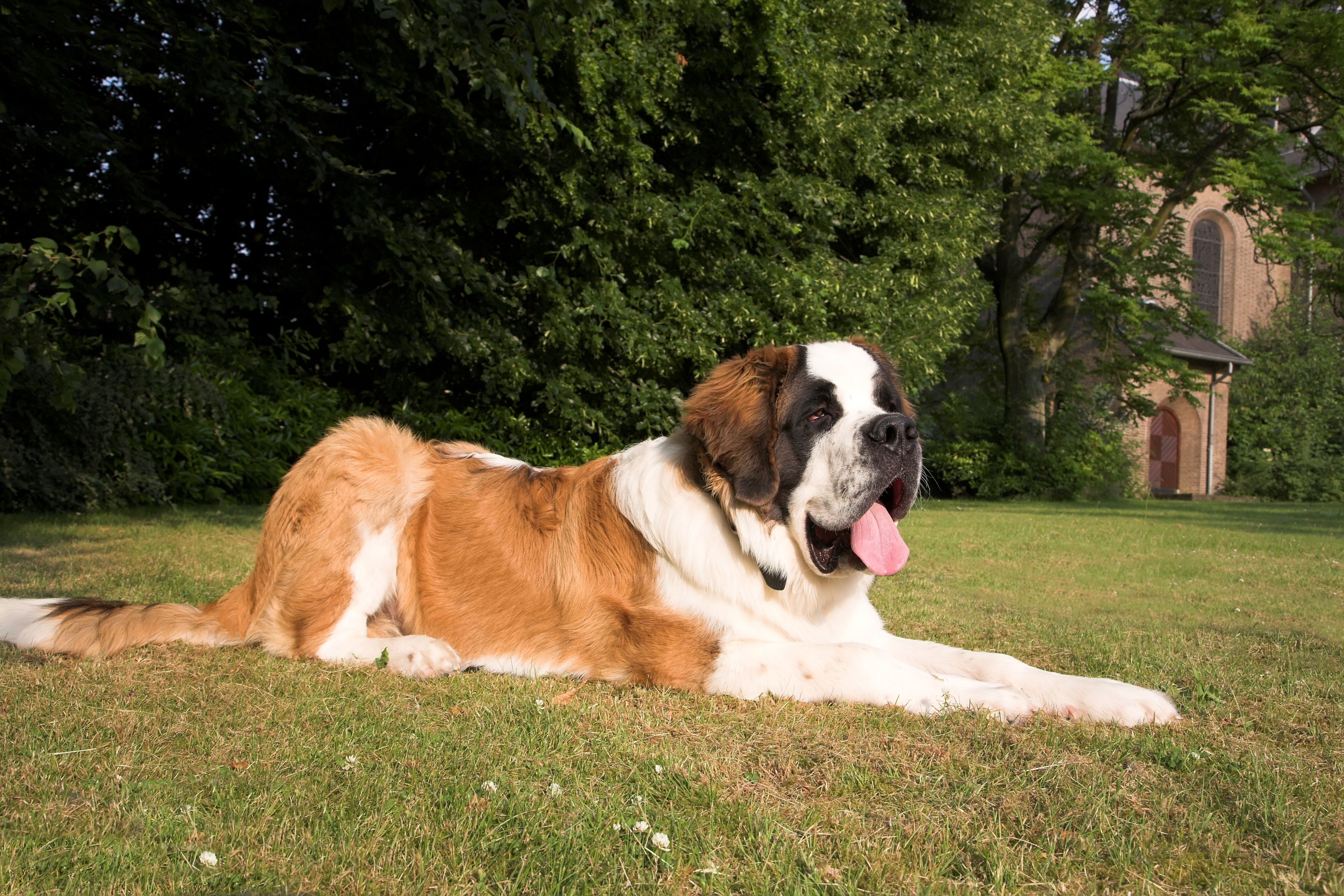
1. Hip & Elbow Dysplasia
Hip and elbow dysplasia are the most common and impactful orthopedic problems in senior Saint Bernards. Their massive weight places enormous stress on joints that may have developed imperfectly from birth. By the senior years, chronic pain, reduced mobility, and muscle atrophy are common results.
You may notice your Saint rising slowly, avoiding stairs, showing reluctance to get up after resting, or having a distinctive "bunny hop" gait in the rear. Weight management is the single most effective intervention — every extra pound adds four pounds of force to the joints with each step at this size.
Supports cartilage repair and reduces joint inflammation — an absolute essential for large and giant breeds with dysplasia.
View on Amazon →A giant-format orthopedic bed is essential for a Saint Bernard — proper cushioning prevents pressure sores and helps them rise more comfortably.
View on Amazon →Reduces systemic inflammation that drives joint disease. Also benefits the Saint's thick coat and supports cardiovascular health.
View on Amazon →Helps you assist your Saint Bernard when rising or navigating difficult terrain — a practical tool when managing a 150+ lb senior dog.
View on Amazon →2. Heart Disease (Dilated Cardiomyopathy)
Dilated Cardiomyopathy (DCM) — in which the heart muscle weakens and the heart chambers enlarge — is significantly more common in giant breeds, and Saint Bernards are among the most at-risk. The heart progressively loses its ability to pump blood efficiently, leading to congestive heart failure if left unmanaged.
Early signs include exercise intolerance, coughing (especially at night or when lying down), labored breathing, a distended abdomen, and fainting episodes. Annual cardiac exams with auscultation are essential from age 5 onward, and an echocardiogram may be recommended for more detailed monitoring.
Cardiac Warning Signs
- Persistent cough, especially at night or after rest
- Rapid, labored, or noisy breathing at rest
- Sudden intolerance of previously easy exercise
- Swollen abdomen (fluid accumulation)
- Fainting or sudden collapse
- Blue-tinged or pale gums
Encourages consistent hydration, which supports cardiovascular and kidney function. Flowing water is more appealing to most dogs than a static bowl.
View on Amazon →3. Bloat (Gastric Dilatation-Volvulus)
GDV is one of the most dangerous emergencies a Saint Bernard owner can face. The stomach fills with gas and rotates on its axis, cutting off blood supply to both the stomach and the spleen. It can kill within hours. Deep-chested giant breeds like the Saint Bernard are at very high risk, and the danger only increases with age.
Feed two to three smaller meals daily rather than one large meal. Avoid vigorous exercise for 60–90 minutes after eating. Use a slow-feeder bowl to reduce gulping and air swallowing. Discuss prophylactic gastropexy with your vet — surgically tacking the stomach significantly reduces GDV risk and is often recommended for at-risk breeds.
Bloat — Emergency Signs, Act Immediately
- Visibly distended, hard, or painful belly
- Repeated unproductive retching with nothing coming up
- Extreme restlessness or inability to settle
- Drooling excessively, looking distressed
- Pale, white, or bluish gums
4. Osteosarcoma (Bone Cancer)
Osteosarcoma is a particularly heartbreaking reality for giant breed owners. Saint Bernards have one of the highest rates of bone cancer among all dog breeds, and it most commonly affects the long bones of the limbs. It typically appears in middle-aged to senior dogs and progresses rapidly.
Sudden, severe lameness — especially if it worsens over days without obvious injury — warrants immediate X-rays. Early detection offers the most options. While treatment (including amputation and chemotherapy) can extend quality life, the prognosis is unfortunately often poor. Knowing the signs means your Saint has the best possible chance.
Provides secure footing for a giant senior dog with mobility challenges, reducing the risk of falls that can be devastating at this size.
View on Amazon →Anchors rugs firmly so your Saint Bernard can push off safely — especially important on hard floors when managing pain or weakness.
View on Amazon →5. Obesity & Weight Management
Saint Bernards love food and have a naturally slower metabolism, making obesity a serious and common problem. In a dog of this size, excess weight doesn't just worsen joint disease — it accelerates cardiac strain, reduces respiratory efficiency, and shortens an already compressed lifespan significantly.
Transition to a senior-formulated diet with controlled calories and maintained protein to preserve muscle mass. Measure portions precisely and resist the urge to supplement with table scraps. Regular, gentle exercise such as slow leash walks should continue as long as the dog is comfortable.
Calorie-controlled with joint-supporting nutrients and maintained protein — formulated for the specific metabolic needs of aging giant breeds.
View on Amazon →Supports connective tissue, cartilage, and joint integrity throughout the body — essential for a giant breed carrying so much weight on aging joints.
View on Amazon →6. Heat Sensitivity & Respiratory Issues
Saint Bernards were bred for cold mountain environments, and their large bodies generate and retain heat poorly. Senior Saints are even more susceptible to heat stress, as their cardiovascular and respiratory systems are less efficient. In warm or humid weather, even mild exertion can lead to overheating.
Walks should happen only in the cool of early morning or evening during warm months. Always provide shade and fresh water. Watch for heavy panting, drooling, stumbling, or a glazed expression — these are early signs of heat stress requiring immediate cooling and veterinary attention.
7. Skin, Coat & Pressure Sores
Saint Bernards have thick, heavy coats that require consistent maintenance. Senior dogs may struggle to self-groom due to joint pain and reduced flexibility. Their large body mass also means they spend significant time lying down, which creates pressure sores — particularly on bony prominences like elbows, hips, and hocks.
Check for calluses, raw skin, or open sores during every grooming session. Keep their coat clean and free of mats, and keep their sleeping surface adequately cushioned at all times. Dry, flaky skin is common with age and responds well to omega fatty acid supplementation.
Moisturizes and soothes aging skin without stripping the Saint's natural coat oils. Ideal for sensitive senior skin prone to dryness and irritation.
View on Amazon →8. Mobility at Home
A Saint Bernard who can't rise safely is both uncomfortable and difficult to assist. Slippery floors are genuinely hazardous for a dog of this size — a fall can cause serious injury and can dramatically hasten decline. Creating a safe, traction-rich home environment is one of the most impactful things you can do for your senior giant.
Eliminates dangerous jumping in and out of vehicles for a large senior dog. Protects joints with every car trip.
View on Amazon →Monitor your Saint Bernard remotely for signs of distress, breathing changes, or difficulty getting up when you're away from home.
View on Amazon →9. Mental Enrichment & Cognitive Health
Saint Bernards are gentle, emotionally intelligent dogs who are deeply attuned to their families. As physical activity decreases, mental stimulation becomes even more important to prevent boredom, anxiety, and cognitive decline. Short, calm training sessions, puzzle feeders, and simple nose-work games are perfect for a senior Saint whose body may be slowing, but whose mind is still very much present.
Engages your Saint's calm, clever mind without physical exertion. Helps prevent boredom and keeps cognitive function sharp in senior years.
View on Amazon →10. Hemp Products for Daily Comfort
For day-to-day pain and anxiety management between vet visits, hemp-based products can be a gentle and effective addition to your senior Saint Bernard's wellness routine.
Supports joint comfort, reduces anxious behaviors, and promotes calm. Easy to add to food for a large senior dog's daily routine.
View on Amazon →A treat-format daily supplement for joint and anxiety support — convenient and enjoyable for even the most easy-going gentle giant.
View on Amazon →Helps older Saints navigate at night if vision is declining, reducing the risk of nighttime accidents and disorientation.
View on Amazon →Senior Vet Checklist for Saint Bernards
- Biannual check-ups from age 5 — giant breeds age faster
- Annual cardiac auscultation and echocardiogram as recommended
- X-rays for any sudden or severe lameness — rule out osteosarcoma
- Full bloodwork including kidney, liver, and thyroid panels
- Discuss prophylactic gastropexy if not already performed
- Body condition scoring at every visit — weight management is critical
Every Day with a Saint Is a Gift Worth Protecting 🐾
Their lives are shorter than we'd ever choose, which is exactly why every year — every season, every slow morning walk — matters so much. Give your gentle giant the attentive care their big heart has always deserved.