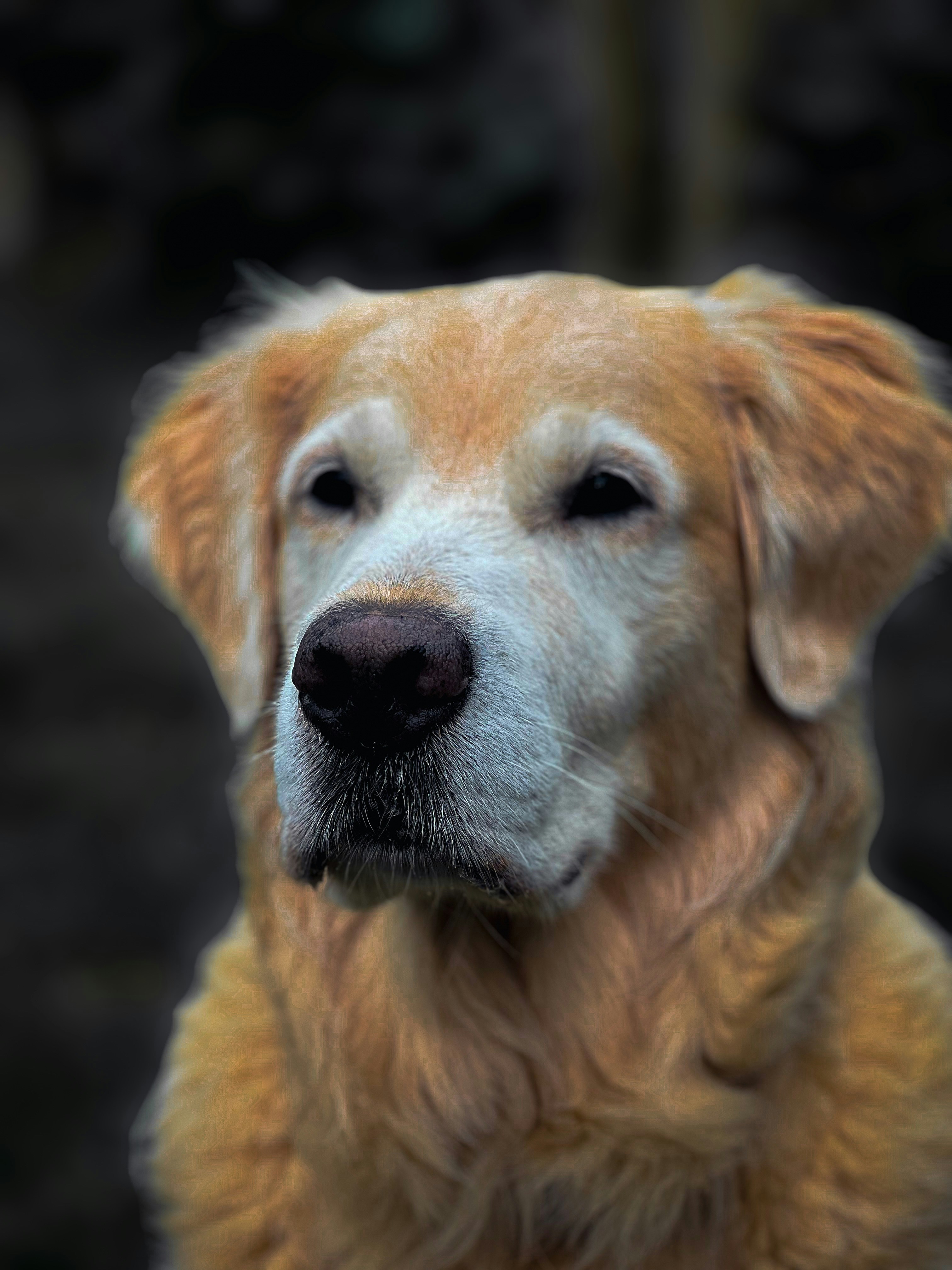
You leave for work. You come back hours later and your dog acts as though you've returned from a year-long expedition. That reunion feels real — because it is. Here's what science has found about what happens inside your dog when you're not there.
What Happens When You Walk Out the Door
Within minutes of your departure, many dogs undergo measurable physiological changes. Cortisol — the primary stress hormone — rises in dogs who are separated from their owners. Heart rate can increase. Some dogs begin pacing, others park themselves by the front door or a window and wait. The behavior varies by individual, but the underlying biology is consistent: your absence registers as a genuine stressor.
This isn't conditioning or habit-seeking. It's attachment — the same neurobiological system that binds parents and children, mates, and close friends in social mammals. Dogs are attachment animals. And you, to your dog, are their primary attachment figure.
Researchers in Sweden measured dogs' cortisol levels and greeting behavior after owners were absent for 30 minutes, 2 hours, and 4 hours. Dogs showed significantly more intense greeting behavior — more vocalization, more jumping, more sustained contact — after longer absences. The 4-hour separation produced the most intense reunion responses. Dogs were tracking time and responding to its passing.
Do They Know How Long You've Been Gone?
This is one of the most interesting questions in canine cognition. Dogs don't read clocks — but they do track time through a combination of scent decay and circadian rhythm. Your scent lingers in the environment, and its strength decreases over time. Dogs are extraordinarily sensitive to this gradual fading, which gives them a rough sense of elapsed time. When your scent has faded significantly, they know you've been gone a long while.
This also explains a behavior many owners notice: dogs often begin showing anticipatory behavior — waiting by the door, becoming restless — at approximately the time their owner usually returns. They're using their internal circadian rhythms and scent memory together to predict your arrival.
The Scent Comfort Effect
One of the most reliably studied findings in this area is that owner-scented objects measurably reduce anxiety in dogs during separation. Studies using worn clothing, blankets, or even recorded voices have shown that the owner's scent and sound lower cortisol levels and reduce anxious behavior in separated dogs. Your scent isn't just a signal to your dog — it's a form of comfort, physiologically real and calming.
This is why leaving a recently worn t-shirt with a dog who struggles with separation anxiety is not a sentimental gesture — it's evidence-based care.
What "Missing" Looks Like in Dogs
Dogs express longing differently than humans — but the signs are there if you know what to look for. Common behaviors when dogs miss their owner include: waiting by the door or window, carrying or nuzzling the owner's belongings, refusing food, reduced play and engagement with toys, increased sleeping (especially in the owner's usual spots), and heightened sensitivity to sounds that might signal the owner's return.
Many dog owners return home to find their dog has been sleeping in their bedroom, on their side of the bed, or in their usual chair. This isn't coincidence — it's scent-seeking comfort behavior. Your dog is surrounding themselves with the densest concentration of your scent available. It's the canine equivalent of holding onto something that smells like someone you love.
Senior Dogs and Separation
Older dogs often experience separation more intensely than they did in their younger years — for several interconnected reasons. First, senior dogs are more dependent on their owners for physical comfort, routine, and reassurance. Second, age-related cognitive changes can make the disorientation of being alone feel more pronounced. Third, dogs who have spent a decade or more with the same person have a deeper, more layered attachment — the loss of that presence, even temporarily, registers more strongly.
If your senior dog has started showing new anxiety around your departures — whining, pacing, unusual destructive behavior, or house accidents — it's worth discussing with your vet. Age-related cognitive dysfunction can amplify separation anxiety, and there are both behavioral and nutritional approaches that can help.
"The depth of a dog's longing for their person is proportional to the depth of their bond — and in a senior dog who has spent years building that bond, the longing can be profound."
How to Help Your Dog When You're Away
For dogs who struggle with your absence: leave a recently worn piece of clothing. Maintain a consistent departure and return routine — unpredictability amplifies anxiety. Consider leaving calming music or a TV show playing (studies show dogs respond positively to species-appropriate audiovisual content). For senior dogs with significant separation anxiety, natural calming supplements, pheromone diffusers, or vet-prescribed interventions can make a meaningful difference.
And when you come home — let the reunion be real. Take the thirty seconds your dog needs. Get down to their level. Let the greeting happen. That moment of reconnection is biologically significant for them. It closes the loop of absence with the proof that you always come back.
🏠 Key Takeaways
- Dogs experience measurable cortisol spikes when separated from their owners
- They track elapsed time through scent decay and circadian rhythms
- Owner-scented objects measurably reduce separation anxiety — this is evidence-based care
- Senior dogs often experience separation more intensely due to deeper attachment
- New separation anxiety in an older dog can signal cognitive changes worth discussing with a vet
Yes — your dog misses you. Not the way a human misses someone, but in their own layered, scent-and-time-anchored way. The door they sit beside, the spot they choose to wait, the greeting that never grows smaller — these are not performances. They are the expression of an attachment so deep it shows up in their cortisol, their heart rate, their behavior, and their biology. You are, without question, missed.